
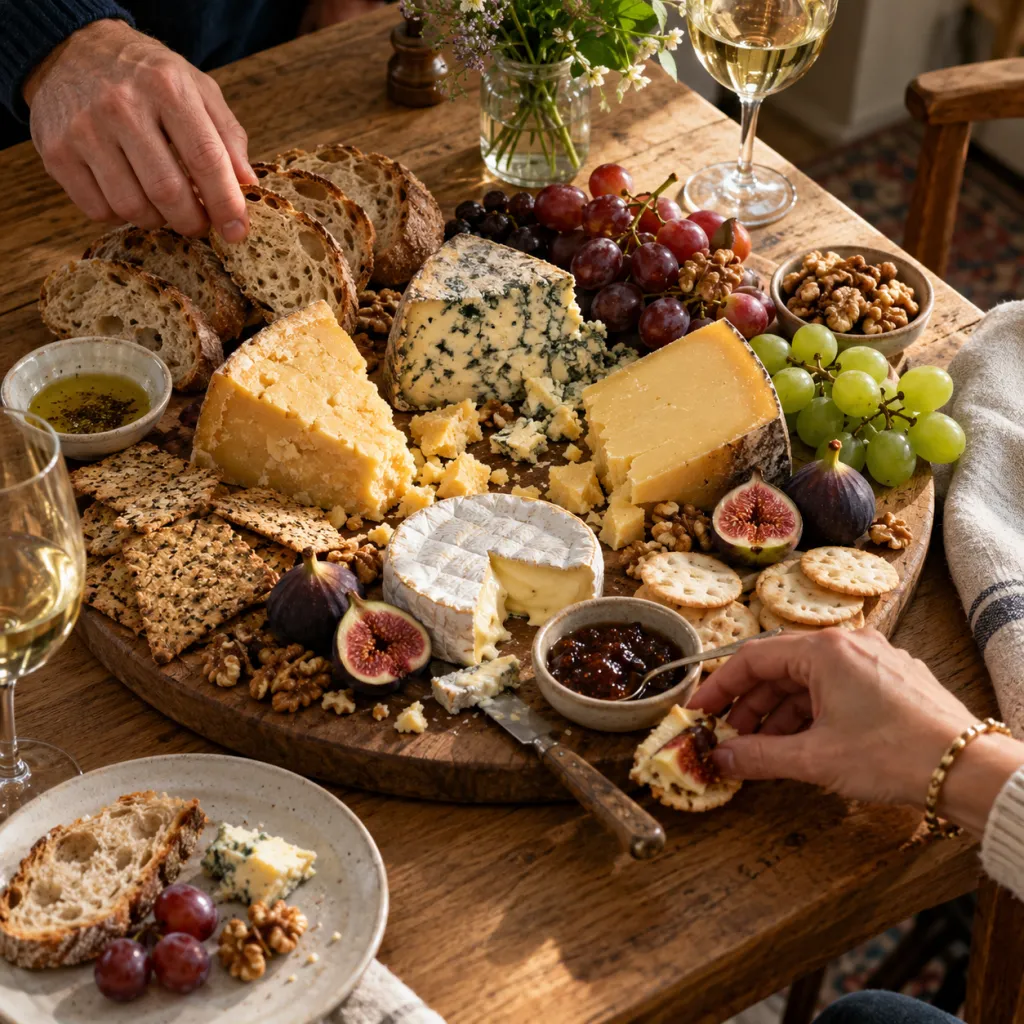
Cheese has been part of our lives for thousands of years, and it still brings people together in the same way it always has. From soft, creamy varieties to sharp, crumbly classics, there is a type of cheese for every taste and every occasion. Whether you are putting together a spread for friends or simply treating yourself after a long day, the cheese board sits at the heart of good food and good company. At The Cheese Shop Nantwich, we spend our days thinking about how to help people build boards they will remember, and we want to share what we have learned.
Crafting the ideal cheese board
A great cheese board is all about variety. If every cheese on the board tastes the same, the experience falls flat rather quickly. Instead, aim for a mix that includes something soft, something hard, something blue, and something with a bit of age to it. Soft cheeses bring a gentle, buttery quality, while hard cheeses add a satisfying bite. Blue cheese brings a punch of flavour that some people adore, and others need to warm up to, and aged cheeses offer that deep, nutty character that comes from time and patience.
Balance matters just as much as variety. Think about how the flavours will sit next to each other. A very strong blue cheese can overpower a delicate soft cheese if they are placed too close together, so give each cheese its own space on the board. Textures should also contrast nicely, so a creamy cheese next to a firm, crumbly one creates a much more interesting mouthful than two similar cheeses side by side.
The best Nantwich cheese for a cheese board
When it comes to building a board with real character, local cheese should take pride of place. Cheshire has a long and proud cheese making tradition, and a board that reflects this heritage feels far more special than one filled with anonymous supermarket wedges. We always recommend including a proper Cheshire cheese as the centrepiece, and our wax bound Cheshire cheese is a lovely example of the region done properly, with a crumbly texture and a gentle tang that pairs well with almost anything else on the board.
Do not be afraid to include something a little less familiar too. Smaller producers often make cheeses in tiny batches that never make it onto supermarket shelves, and these can be the ones your guests remember most. A lesser known goat cheese or a small batch blue can turn a good board into a memorable one, simply because it offers something people have not tasted before. This sense of discovery is part of what makes a cheese board so enjoyable, and it is something we try to encourage through our own cheese club, where members get to try new and interesting cheeses on a regular basis.
Supporting elements and pairings
No cheese board is complete without the right accompaniments. Fresh fruits such as grapes, figs, and apple slices add sweetness and a bit of juiciness that cuts through richer cheeses. Nuts bring crunch and a different kind of flavour depth, with walnuts and almonds being particularly good all round choices. A little charcuterie, such as thin slices of cured meat, can also round out the board nicely if you want something more substantial.
Wine pairing is where things can get really enjoyable. A crisp white wine tends to work beautifully with soft and creamy cheeses, while a fuller bodied red suits hard and aged cheeses well. Blue cheese has a natural affinity with sweeter wines, since the sweetness balances the sharp, salty character of the cheese. There is no need to overthink this too much, since the main aim is simply to find a pairing that tastes good to you and your guests.
Bread and crackers act as the neutral base that lets the cheese do the talking. A plain, good quality cracker or a slice of crusty bread will not fight for attention the way a heavily flavoured cracker might. This keeps the focus on the cheese itself, which after all is the whole point of the board.
Presentation tips for your cheese board
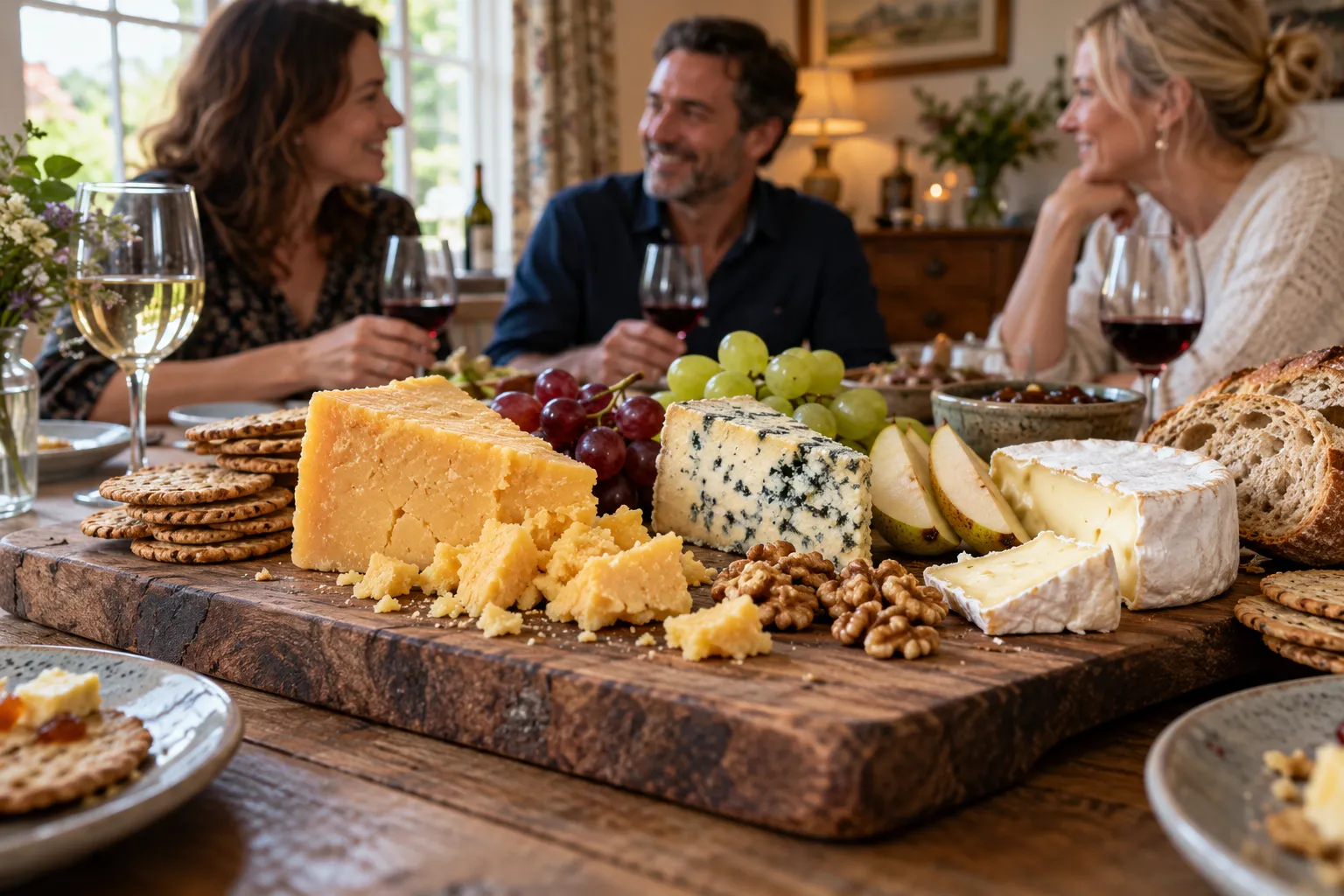
How a cheese board looks matters almost as much as how it tastes. A board that has been thrown together without much thought rarely gets the same reaction as one that has been arranged with a little care. Start by thinking about colour. A board with only pale, creamy cheeses can look a bit dull, so bring in some colour through fruit, nuts, or even a small pot of chutney or honey.
Shape and size also play a role. Cutting some cheeses into wedges, crumbling others, and leaving a few whole with a knife beside them creates a natural sense of variety and invites guests to help themselves. Group similar items together but leave gaps so the board does not feel cramped. A little breathing space actually makes everything look more generous, not less. We go into far more detail on this in our own guide to building the perfect cheeseboard, which is worth a read if you want to take your presentation further.
Additional recommendations for storing and serving cheese
Getting the most from your cheese is not just about what you buy; it is also about how you look after it before serving. Cheese should generally be kept in the fridge, but it needs to be wrapped properly to stop it drying out or picking up other smells. Waxed paper or specialist cheese paper works far better than cling film, since it allows the cheese to breathe a little while still protecting it. We cover this in more depth in our guide on storing your cheese correctly, which is worth following if you want your cheese to stay in top condition.
Serving temperature makes a big difference too. Cheese tastes far better when it has had time to come up to room temperature, since cold cheese from the fridge has much less flavour and a duller texture. Take your cheese out around thirty to sixty minutes before serving, depending on the size of the piece, so the flavours can properly open up.
It is also worth building a relationship with local cheese producers and independent shops rather than relying only on supermarkets. Smaller retailers tend to have more knowledge about where their cheese comes from and how it has been made, and they can often point you towards something new that suits your taste. We have built our own business around exactly this kind of knowledge and care, and you can read more about our story on our about us page.
Create a Cheese Board Your Guests Will Love
A well-built cheese board comes down to a few simple ideas. Choose a good variety of cheese types, think carefully about how flavours and textures sit together, and do not be afraid to include something a little unusual alongside your familiar favourites. Pair your choices with fruit, nuts, bread, and a suitable wine, and take the time to arrange everything so it looks as good as it tastes. Store your cheese properly and let it warm up before serving, and you are well on your way to a board that guests will talk about long after the last crumb has gone.
The best part of all this is that there is no single correct way to do it. Personal taste should always guide the final result, so feel free to experiment with combinations until you find what genuinely suits you and the people you are sharing it with.
If you are ready to start building your own board, we would love to help. Browse our range of local and speciality cheeses, join our cheese club for regular discoveries, and get in touch with our team whenever you need advice on choosing the right selection for your next gathering.