Brie de Meaux: An Icon of French Flavour
If you think of French cheese, Brie is likely one of the first that springs to mind. Known as the “King of Cheese”, Brie de Meaux comes from the Île-de-France region and has been a classic favourite for centuries. It’s soft, creamy and has a subtle nuttiness that pairs beautifully with a crusty French baguette and a glass of Champagne.
When you try Brie de Meaux, the velvety white rind gives way to a rich, buttery centre that gently oozes over time. This cheese brings depth and comfort, perfect as part of a cheeseboard or simply melted over baked potatoes.
We love recommending it to friends who are just getting into French cheese. It’s approachable, elegant, and always a crowd-pleaser.
Comté: A French Alpine Treasure
From the Jura mountain region of eastern France, Comté is a firm, raw cow’s milk cheese that ages beautifully. Depending on whether it’s been aged for four months or more than twelve, you’ll notice changes in texture and complexity. Young Comté is mild and milky, while older versions develop nutty, caramelised flavours with tiny crunchy crystals.
It’s one of France’s most popular cheeses, and with good reason. We love slicing it thin to enjoy on its own or using it to add depth to creamy sauces. It’s also fantastic for melting in fondue.
Try pairing Comté with dry white wine such as Sauvignon Blanc or a nutty Pinot Noir. You’ll discover why this is one of France’s most-loved cheeses.
Délice de Bourgogne: Velvet in Cheese Form
For those who adore ultra-creamy cheeses, the triple-cream Délice de Bourgogne is pure joy. Made in Burgundy, this luxurious cow’s milk cheese is rich and decadent with a silky texture that’s perfect for spreading.
Thanks to the added cream during the cheese-making process, it’s like a cross between whipped butter and Camembert. The taste is slightly tangy, while the texture melts beautifully on bread or crackers.
We suggest enjoying it with Champagne, fresh berries or even some fig jam. It’s a standout addition to any celebration or after-dinner treat.
Blue Cheeses That Surprise and Delight
France is also known for its incredible blue cheeses. These are cheeses injected with Penicillium mould, creating those distinctive green-blue veins and bold flavours. They can be intense, but also incredibly tasty when balanced out with sweet or savoury sides.
Fourme d’Ambert: The Gentle Blue
Fourme d’Ambert is one of the mildest and creamiest of the French blue cheeses. Made in the Auvergne region, it’s cylindrical in shape and less pungent than other blues, which makes it ideal for beginners.
This cheese has a soft, slightly mushroomy aroma and a gentle punch of salt. Its balanced flavour means it pairs well with sweet accompaniments like poached pears or a drizzle of honey.
We enjoy slicing it with apple and walnuts for a perfect snack that’s both savoury and fresh.
Bleu d’Auvergne: Bold, But Beautiful
If you prefer something with more of a punch, Bleu d’Auvergne might be your pick. Made in central France, this blue cheese is creamier and more buttery than Roquefort, yet still has a strong, peppery taste.
It lends itself wonderfully to salad dressings or crumbled over roasted vegetables. We enjoy it with fruit chutney or even on a burger to add a sharp twist.
Pair with dessert wines or port to balance its bold flavour.
Tomme de Savoie: Earthy and Rustic
Over in the Rhône-Alpes region, Tomme de Savoie is a semi-soft cow’s milk cheese with a signature grey-brown rind. At first glance, it might look a bit rough and rustic, but inside it’s smooth, aromatic and slightly tangy.
This cheese often has grassy, earthy notes that reflect the alpine pastures where the cows feed throughout the summer. Tomme de Savoie is both simple and satisfying. We love it as part of a ploughman’s lunch or thinly sliced with pickles and ham.
It works well with dry red wines, pale ales or even cider.
How to Build a French Cheese Board
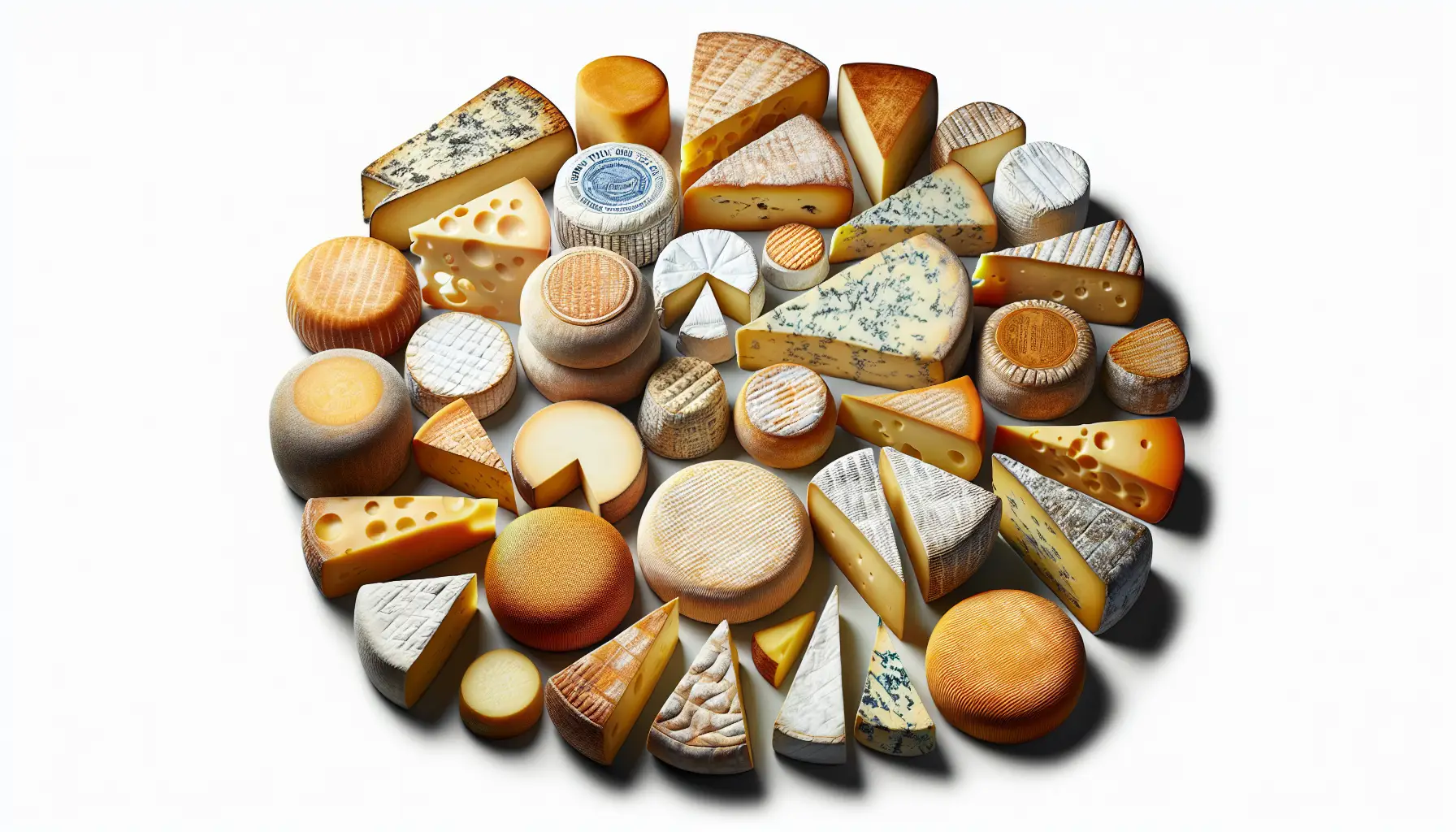
Creating a well-balanced cheeseboard isn’t as difficult as it seems. French cheese offers such a variety of textures and flavours that it’s easy to make a show-stopping selection.
Here’s a simple guide:
- Start with one soft cheese like Brie de Meaux.
- Add one firm or aged cheese such as Comté.
- Include a creamy option like Délice de Bourgogne.
- Bring in a blue cheese such as Fourme d’Ambert or Bleu d’Auvergne.
- Round out the plate with a rustic cheese like Tomme de Savoie.
Serve with crackers, baguette slices, fresh fruit, olives and maybe some nuts or jam. Don’t overcrowd the board and be sure to take the cheeses out of the fridge at least 30 minutes before serving to bring out their full flavour.
Cheese and Wine Pairing Made Easy
You don’t have to be a sommelier to enjoy cheese and wine together, but a few tips will take your tasting session to the next level.
- Match intensity: A strong cheese like Bleu d’Auvergne pairs well with bold wines like port or full-bodied reds.
- Complement textures: Creamy cheeses such as Délice de Bourgogne balance well with the perky bubbles of Champagne.
- Sweet loves salt: Saltier cheeses go great with sweet wines or fruit-based condiments.
The best way to learn is to try different combinations. We enjoy organising small tastings with friends and family so everyone finds a favourite.
FAQs
How long can French cheese be kept once opened?
Soft cheeses like Brie should be eaten within 5-7 days, while harder cheeses like Comté can last up to two weeks if wrapped and stored properly in the fridge.
Can I eat the rind on French cheeses?
Mostly yes. The rind on soft cheeses such as Brie or Délice de Bourgogne is edible and adds flavour. For natural rinds like on Tomme de Savoie, it’s down to personal choice.
What’s the best way to serve French cheese?
Always bring it to room temperature before serving to awaken the full flavour. Cut portions generously and serve with your favourites: bread, fruit, chutney and wine.
Are French cheeses vegetarian?
Some are, but many traditional French cheeses use animal rennet. Always check the label or ask at your local cheese shop. Our team at Cheese Shop Nantwich is happy to advise on vegetarian options.
France has gifted the world with some of the richest and most satisfying cheeses you’ll ever taste. Whether you’re drawn to creamy Brie de Meaux, nutty Comté, indulgent Délice de Bourgogne, or the rustic Tomme de Savoiehttps://www.cheeseshopnantwich.co.uk/p/tomme-de